


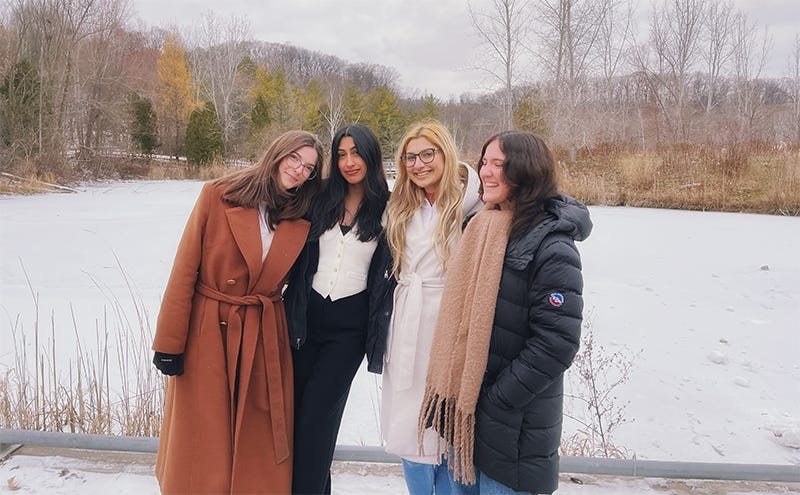
BuildnChill, a retreat for founders, is launching its first women-only edition to bring Gen Z female builders in Canada together.
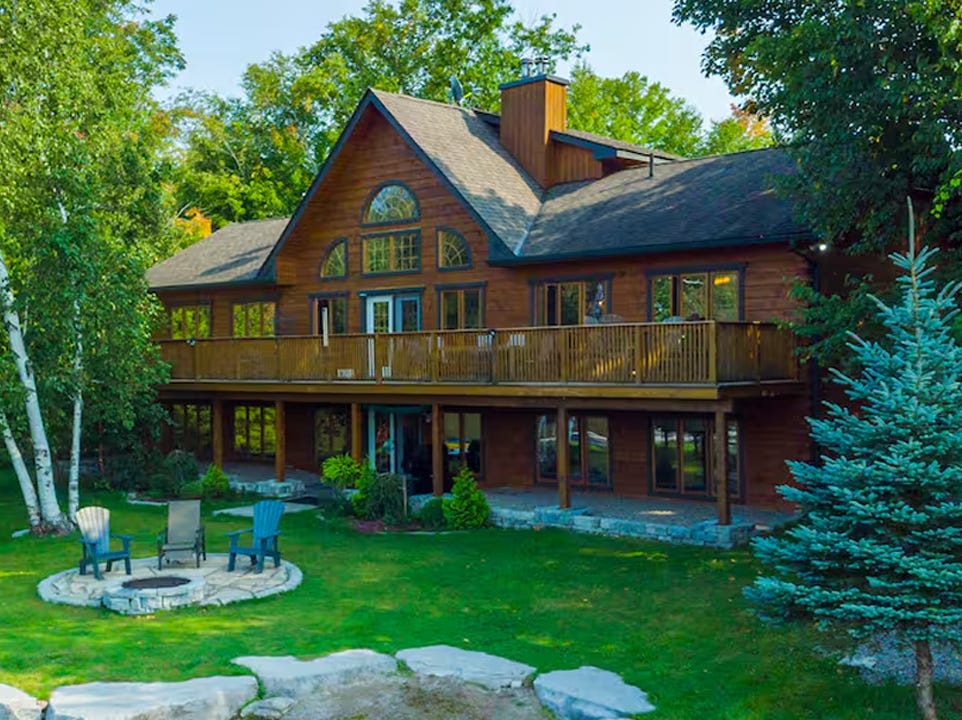
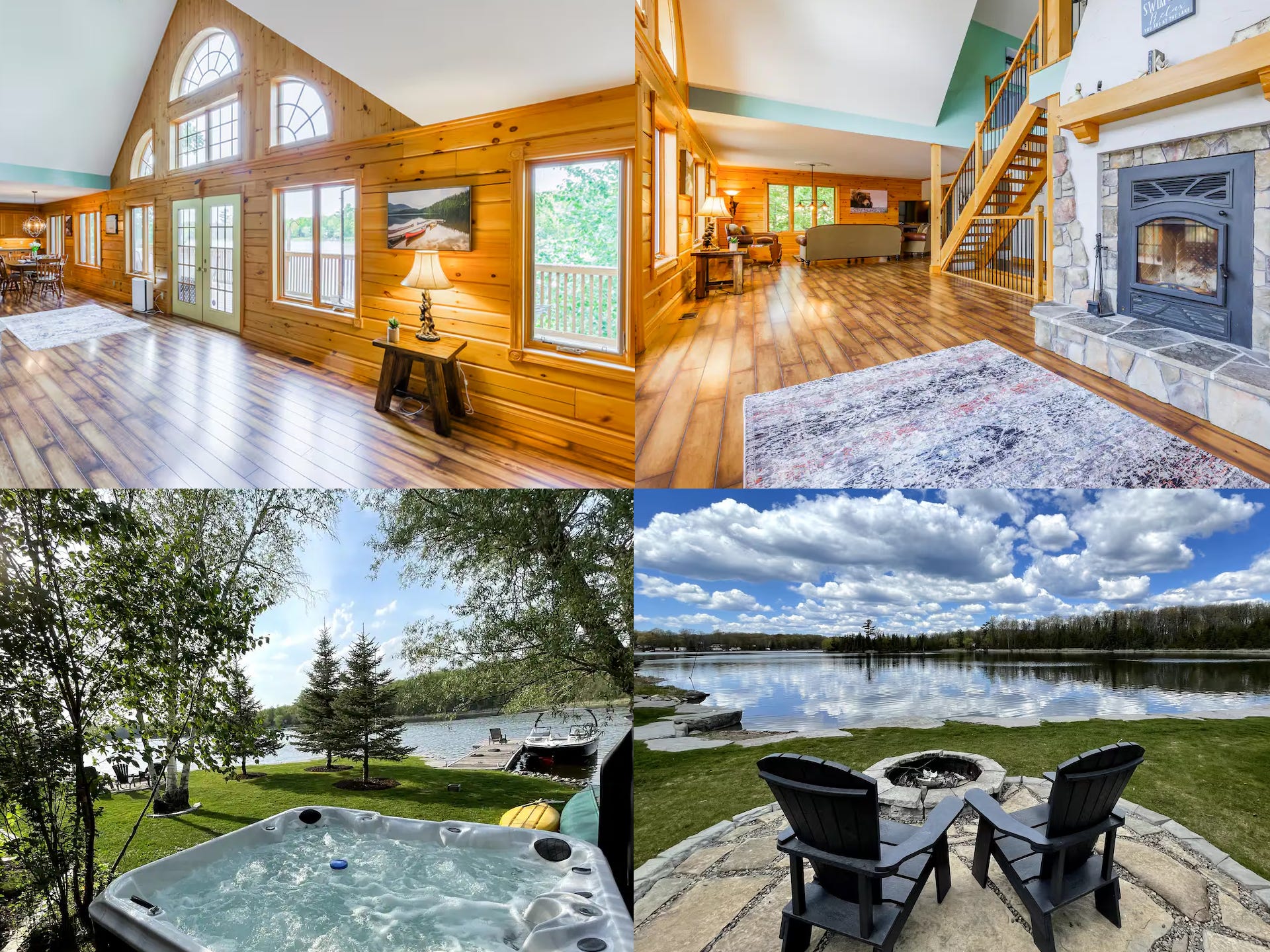
Between Jan. 8–11, the event will take place at a luxury lakefront cottage in Gooderham, Ont., with all expenses covered. The goal being to give guests a space to “show up as their most authentic selves,” “swap real feedback and resources without posturing,” and “leave with catalytic kinds of connection.”
Applications were made public and 15 founders will be selected, all of which have either achieved $250K+ ARR, raised $500K+, or exited a company, and ultimately, are looking for community.

The team behind the initiative are community builders Sarah Simionescu, Julia Fedorin, Maya Lekhi, and Anjali Dhaliwal. Simionescu co-founded and sold sales coaching tool Salesbop, Fedorin is a content creator, writer, and filmmaker, Lekhi is a scout at pre-seed venture fund Afore Capital, and Dhaliwal is the founder of personal branding agent tool Gelee AI.
The idea came together after the organizers shared their experiences of being invited to hacker houses and recognizing that there are few of such spaces curated for women.
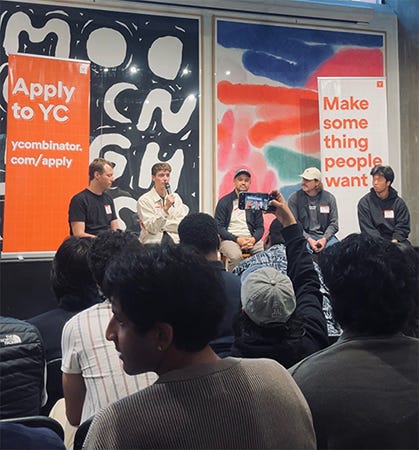
Early Stage Journal found that only three female hacker houses exist globally, all of which have launched in the past two years. In San Francisco, HackHer House launched in 2024 and FoundHer House followed in 2025, while London’s Lumina House opened in 2025.
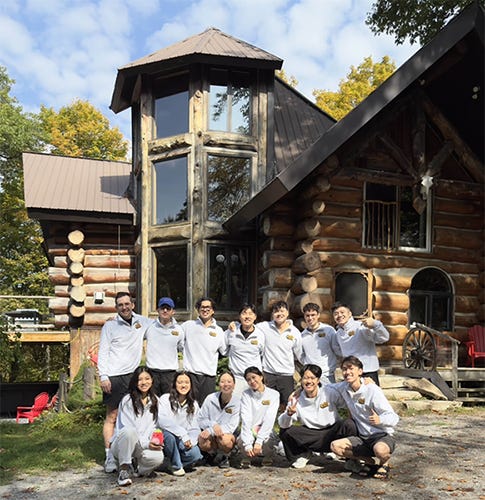
While BuildnChill’s women-only edition—part of a series founded by entrepreneurs James Zhao and Tuan Le—will offer a four-day getaway rather than a shared residential space, the aim is to recreate the kind of experience hacker houses are known for, while taking a more thoughtful and intimate approach—particularly when it comes to comfort and safety.
“As women who are founders, there’s some struggles that only we can truly empathize with each other about,” points out Simionescu. “It allows us to create sisterhood, which is its own special kind of friendship that we really value. So we thought, why not create a space for exactly that?”
Throughout the event, planned activities are set up for less than a third of the time, with the rest left to whatever the founders prefer to explore on and around the private property—from yoga and meditation rooms to hiking trails and the nearby Catchacoma Marina. Through research and talks with major organizers in Toronto, Simionescu found that a common takeaway in creating the impact they envisioned was giving people unstructured time and setting the tone early.
“If you think about how your most recent friendships have formed, you likely stayed up talking for a really long time, and then it’s three in the morning, right?” says Simionescu. “We’re literally giving you space to do that.”
Simionescu adds: “In almost every community, there’s these sort of underlying rules of how you behave. It’s psychology. With BuildnChill, we’re being very specific about what the goal is. We’re attracting a certain kind of person that wants this. We are giving you permission to do this.”
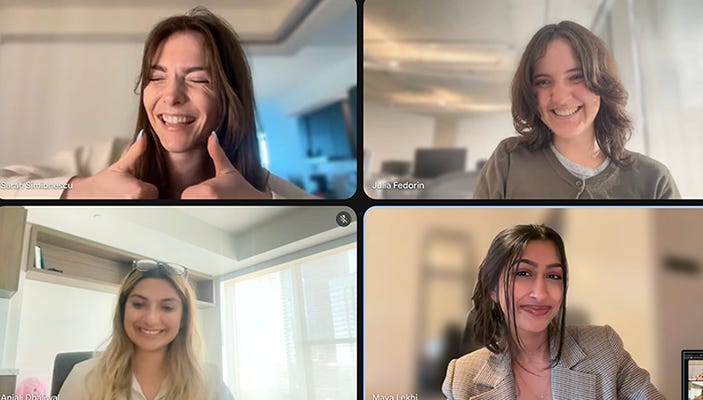
Ultimately, BuildnChill’s women-only edition aspirations extend beyond its debut. From documenting their journey to hosting more gatherings, the initiative is determined to spotlight more Gen Z female builders in Canada.
“We don’t just want to support the women in the room, but also be loud about it and inspire other young women who are watching,” highlights Simionescu. “And that’s why storytelling is so important and cannot be overlooked.”
Taking chances
For Simionescu, that exposure to other Gen Z female builders changed the “entire course” of her career.
In her third year studying computer science at McMaster university, the founder was a year into building Salesbop. At times, she’d skip class to finish assignments and free up more time for her startup. She’d code alone in her dorm room, on the Go Train to her internship in Toronto, and even during another internship in New York.
Working what felt like nonstop, “every day blurred into the next,” and “it was incredibly lonely,” shares Simionescu. Then, she would come across an opportunity that would pull her out of the day-to-day.
While browsing Luma, she came across a pitch competition for female founders in Toronto. Something in her told her to go, even though Salesbop wasn’t planning on fundraising and it was a two-hour trip by car and train. There, Simionescu encountered another female founder close in age for the first time and it happened to be Dhaliwal.
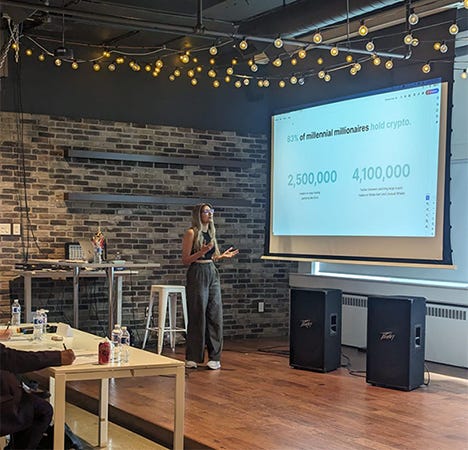
Inspired by Dhaliwal’s confidence and presence on stage, Simionescu thought to herself, “I’m going to grow into the kind of founder who belongs in rooms like that.”
One year later, Salesbop was acquired by revenue enablement firm, FliteHouse. However, an exit “wasn’t in the cards,” reflects Simionescu. There were moments when she felt stuck and even considered giving up. But as she’s done all throughout her life, she figured out her next step by following her curiosity.
As early as the fifth grade, Simionescu started learning how to program. Her father introduced her to the fundamentals through Scratch, a language designed by MIT to teach children how to create interactive stories, games, and animations. Then, she’d fall in love with filmmaking after attending a summer camp that required her to produce and edit a video for a project.

In high school, Simionescu discovered her neighbor also had a passion for filmmaking. The two paired up for competitions and then started a videography company. When business wasn’t picking up, they pivoted to a niche: weddings. That took off, so they decided to continue into university.
While a junior, Simionescu would then team up with her partner and now fiancé, Nikos Dritsakos, to build Salesbop. The goal was to create a product that gave individual professionals their own sales coach. It would review their calls to provide personalized feedback, from ways to improve communication to how to handle objections.

Dritsakos identified the need while growing his marketing agency. He realized how manual and time-consuming sales coaching can be because of the many hour-long sessions involved. It’s also typically inaccessible for most given the cost for employers and the industry’s high-churn culture: reps are often hired quickly and dismissed just as fast.
Simionescu was scared, she admits, having never worked at a startup, but didn’t hesitate. Her videography company becoming a success after struggling at first reminded her of what she’s capable of. And she recognized that Salesbop was not only a great concept but a chance to create an impact.
“We wanted to create something that would give people the opportunity to have more control over their fate, to have the advice and the feedback to get to work on their career, and give them more support, essentially,” emphasizes Simionescu.
Following the signal
The duo were committed to making the product the best it can be. So, they recruited a third co-founder, Jason Huang, Simionescu’s classmate, to help with infrastructure since processing video recordings then analyzing them with AI was resource-intensive.
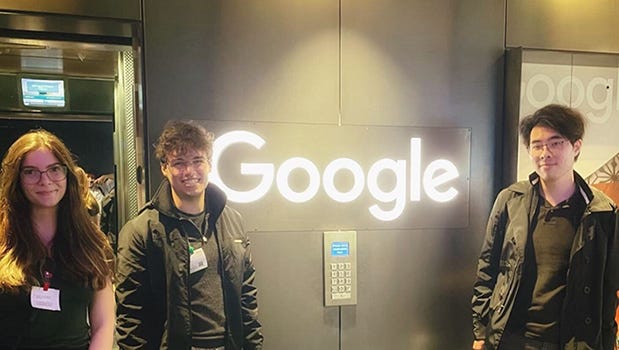
After months of work, Simionescu, Dritsakos, and Huang were ready to share the tool with the public. The reaction was quiet. But it wasn’t because they didn’t understand the value of the concept. The team were building off their own vision alone, rather than alongside people who would benefit.
From then on, they focused on speaking to as many people as possible. They also asked questions that were open-ended, instead of those that elicited a simple yes-or-no, to better understand their day-to-day work and them as a person on a deeper level.
“We tried not to impose our biases,” recalls Simionescu. “We would not introduce the product because we wanted to know what they thought it was. For example, we’d be like, ‘What do you think Salesbop does?’ Or we would not even talk about Salesbop at all and ask, ‘Do you coach your sales team? Why or why not? How were you coached when you started your role? What was your job progression like?”
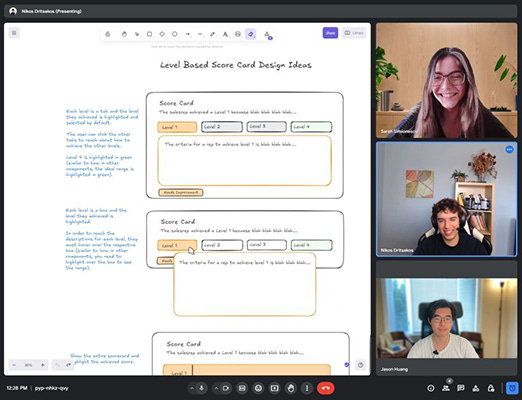
What also impacted the quality of the answers was the way they showed up. They made it clear to those they spoke to that their intention was to get their opinion, not sell them anything, and that they took the time to learn about their background—connecting it to the reason why they chose to reach out to them specifically.
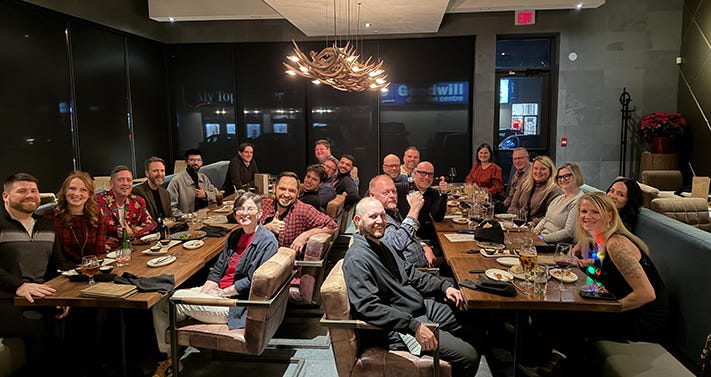
The team doubled down on the approach when they joined the Forge, McMaster’s startup incubator. They were paired with mentor, entrepreneur and investor Ingrid Polini, who helped them rethink their strategy. That included doing cold outreach on LinkedIn for more feedback. It’s how they first connected with Dan Liska, the founder and CEO of FliteHouse, who loved the product so much that he became a white label partner and power user long before making an offer.
Building relationships with customers would guide Salesbop to evolve in more ways that it otherwise might have missed.
Through discovery, the team found that there was much more interest from B2B enterprises, as the platform was better suited to them because of its breadth of functionality and customization.
One of the capabilities that won over customers was its scorecards. The feature came up after Liska mentioned that he was doing them manually and that it would be a relief to have the work automated. It was “unlike anything on the market,” says Simionescu, since the feedback could be tailored to any organization’s best practices.
“We learned that teams want control over what the best practices look like, right?” she explains. “Because it’s different for every industry, every team, and for every product. We actually let organizations upload their own resources so that we could tailor the model’s outputs to their team’s methodologies.”
Looking back on the journey, Simionescu highlights three things that were pivotal to her, and later, to Salesbop’s success. Besides following her curiosity, she points to pursuing what genuinely excited her and being willing to iterate as many times necessary to solve the problem.
When asked what advice she’d share with other early stage founders today, she reminds: “If you’re just starting, you have everything you need in you already. Sometimes the full picture is blurry, but when you zoom in and just focus on the next step, you’ll figure it out.”

Lisa, thank you so much for writing this. 🤍
I’m really grateful for the hours you spent with me, your thoughtfulness in how you listened, and the care you put into every line. Thank you for telling my story so beautifully.
i love this read so much! great job lisa<3