

Tune into the full interview for more behind-the-scenes above or on Spotify or Apple
00:00–3:58: Show, episode, and guest intro
3:59–5:00: The moment Felix and Rudy decided to found what would become Triple X.O.G
5:01–6:16: Why they decided to take the risk to pursue the idea
6:17–7:42: Why they believe no one had yet to pursue the idea
7:43–8:39: Being in the “very early innings” of celebrating Asian culture outside of Asia
8:40–11:48: The first six months of navigating how to create the product
11:49–15:42: The process of finding and working with a formulator
15:43–18:57: Why they went with their intuition over feedback to finalize the recipe after 35 iterations
18:58–20:53: The process of finding and working with a manufacturer
20:54–22:15: Building a community of fans / discovering the Dragons’ Den audition
22:16–23:42: Being persistent in getting people to try the product
23:43–26:05: How they got into their first retail store and how that led to getting into their first chain
26:06–27:00: The impact of building in public over in stealth
27:01–31:31: What keeps them grounded during challenging moments
31:32–34:17: What happened after the Dragons’ Den episode and what’s coming up in the year ahead
34:18–37:30: Advice for other early stage founders
Behind any innovative idea with the potential to become a household name is rarely a single “a-ha” moment, but a trail of experiences long before what outsiders see as overnight success happens.
For Felix Chen and Rudy Pham, one of those moments was an eight-to-ten-hour trek through Hanes Valley, B.C., where they tossed around business ideas as they tried to find their way back on the right path. Once they reached the top of the boulder field, they landed on one they knew was worth pursuing and, to their surprise, hadn’t been attempted before: modernizing a concoction Chen had mixed for Pham weeks earlier at a friend’s rooftop party.

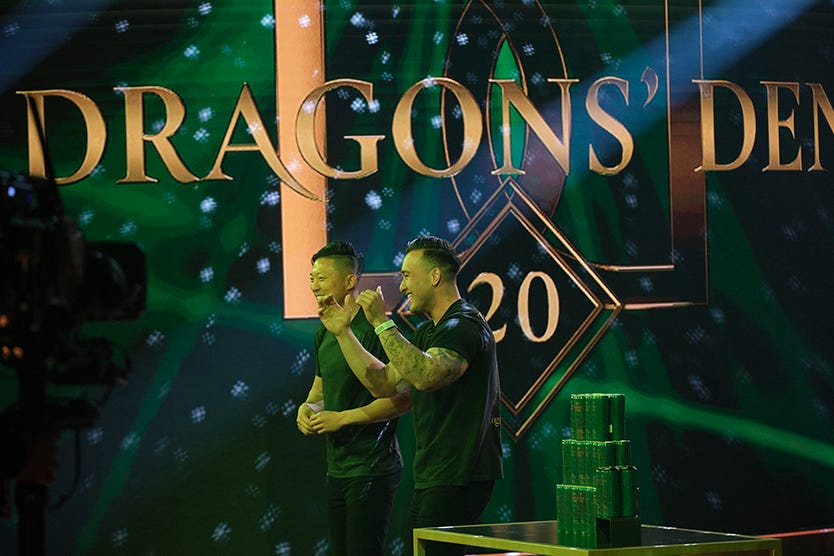
Three years later, they would innovate a new category born from an East-to-West staple, catch the attention of major retailers and sell their products in 100 stores across the province, and build a community of fans rallying behind them like ambassadors. The duo would also appear on the popular Canadian reality TV show Dragons’ Den, where they received multiple investment offers.
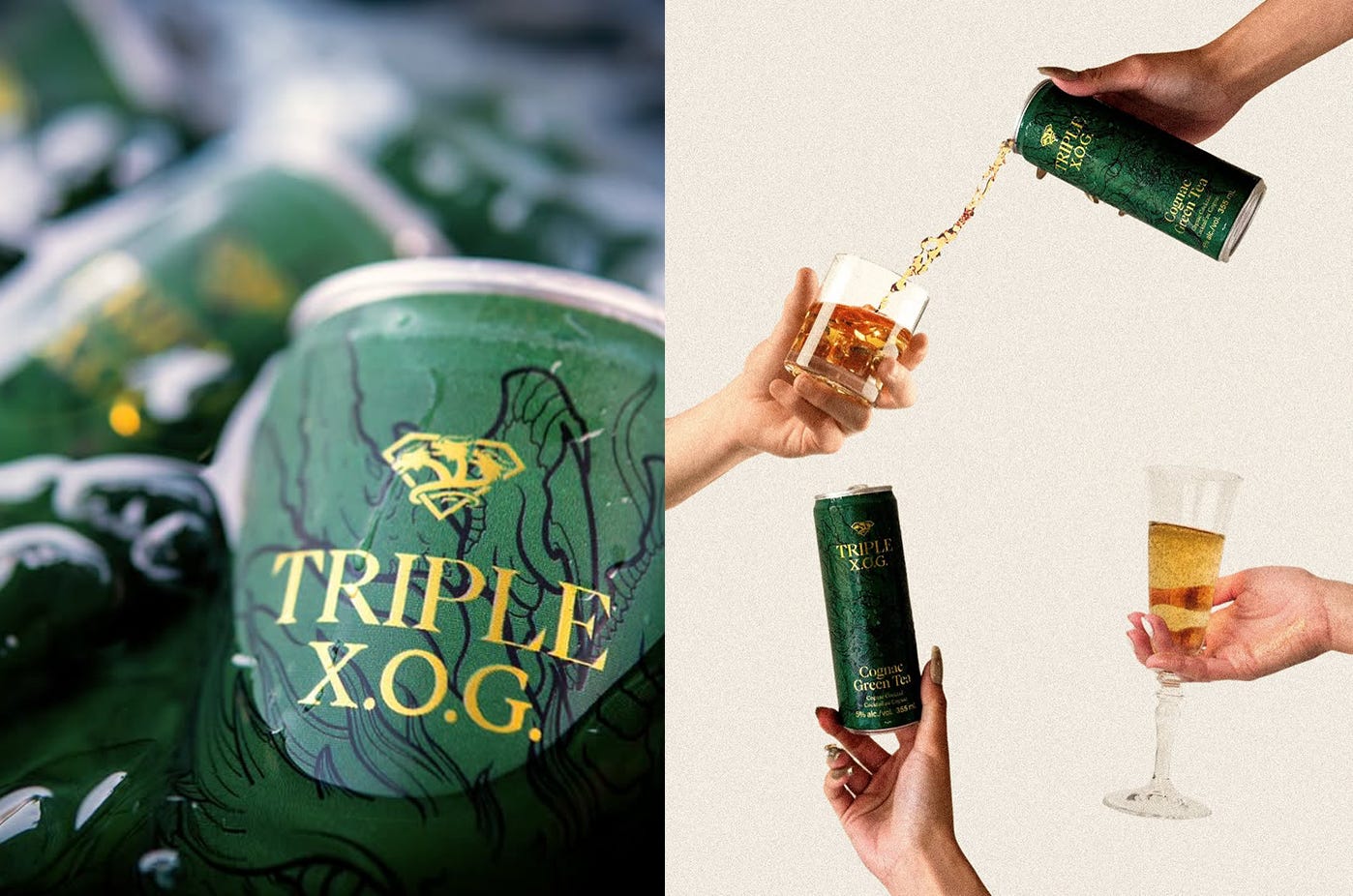
That idea? Triple X.O.G., the world’s first ready-to-drink (RTD) cocktail of its kind, ranked among the top sellers in B.C. It blends French cognac, jasmine green tea, and Canadian honey with light carbonation. At 5% ABV, Triple X.O.G. was crafted to offer both an elevated and accessible beverage for any occasion—from intimate gatherings to public events—and to cater to a spectrum of palates: those who seek depth of flavour or lean toward something lighter. Finding that middle ground was crucial, as it reflects the founders’ different preferences.
Ultimately, Chen and Pham’s mission for the brand goes deeper than an experience that’s “unlike anything on the market.” It’s intended to represent Asian heritage, culture, and connection.
Triple X.O.G. pays tribute to the concoction’s origins in Hong Kong, where it became a quintessential cocktail in karaoke lounges in the 2000s before making its way across Asia, Australia, and North America. And it’s a nod to an adapted version found in Vancouver that carries the nostalgia of enjoying the drink with family and friends while singing classics—from Chinese hits like “Tong Hua” to Western ones by the Backstreet Boys and Spice Girls.
This is the story of two best friends turned business partners with no background in the beverage industry but infectious energy and relentless hustle, who went from searching Google and YouTube on how to start their venture to trusting their intuition to get the recipe right after 35 iterations—even when feedback was all over the map—and stayed true to their vision for two years as they bootstrapped the company before launching.
Driven to bridge East and West
Once home from the hike, Chen and Pham started researching the market. Although the concoction was so popular it was dubbed the “Asian gin and tonic,” they found there wasn’t a single product—not even anything that came close—that brought the cocktail onto shelves.
“We decided to pursue it because it was one of those moments where you see—and it doesn’t happen very often—a true gap in the market of something just not existing,” shares Chen. “Human history’s already gone this far, and it’s hard to come by something that hasn’t already been tried or out there.”
The founders add that taking the risk to be the first wasn’t just business. It was an opportunity to propel a shift still in its “very early innings”: celebrating Asian culture outside of Asia. They were motivated to drive that momentum with an experience that bridges East and West.
Market snapshot: The rise of Asian beverages globally
Asia is now regarded as the “cocktail capital” of the world after years of being overshadowed, according to luxury and lifestyle magazine Condé Nast Traveler. Over the last decade, Hong Kong, Tokyo, and Singapore have become increasingly known for innovation in mixology by bringing together regional spirits and ingredients with cultural traditions. They’re also recognized for their sustainability focused on zero-waste, where every part of an ingredient is used—from “leaves and flowers to peels and stems.”
Meanwhile, the U.S. is seeing a rise in Asian alcoholic beverages, as reported by Cold Tea Collective, a media platform and community focused on the Asian diaspora in North America. These brands are leading in bringing new experiences to American consumers through a variety of RTD products, shown in an analysis of major U.S. food and beverage launches from the first half of 2025.
In Canada, fewer of such companies are found on the market. In B.C., there’s Vanmak, which offers Korean rice wine (maekgoli) in varieties apart from its original taste, including strawberry, peach, and mango. There’s also Tao, a line of hard seltzers featuring nostalgic Asian flavours, like HK Lemon Tea, Lychee Fizz, and Green Grape.
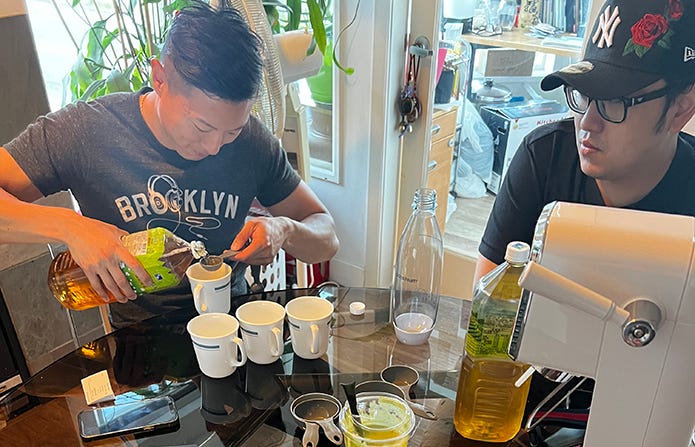
Over the next six months, Chen and Pham tried to figure out on their own how to start an RTD brand. Between looking up information on Google and watching success stories on YouTube, they became “mad scientists” in Chen’s kitchen, mixing various teas, alcohol, and honey to come up with their own distinct formula.
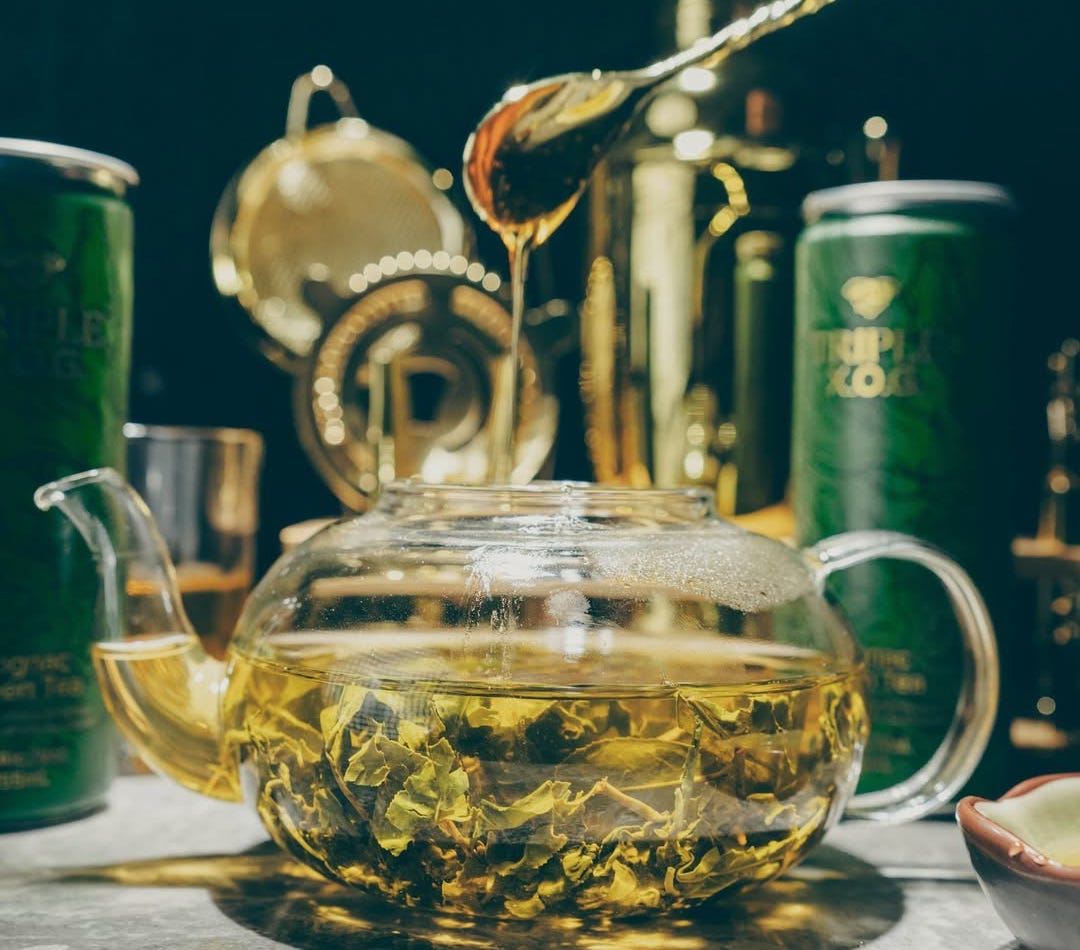
They would eventually settle on French cognac and jasmine green tea, then add Canadian honey and carbonation—setting it apart from the versions found in Hong Kong and Vancouver lounges.
In Hong Kong, the cocktail often consisted of Scotch whisky and bottled green tea pre-sweetened with a blend of sugar and honey—which softens the edge of the spirit with fresh, herbaceous notes. When it reached Vancouver, whiskey was replaced with cognac. Cognac’s notes of vanilla, spices, and floral undertones made for a smoother experience than whiskey’s smoky, peaty profile.
These roots are honoured in Chen and Pham’s decision to name the brand Triple X.O.G. Triple reflects elevating the quality and ingredients of the cocktail. And X.O.G. stands for “Extra Old,” a higher-quality grade of cognac, and “Original,” a tribute to its origins.
“In general, [RTD cocktails] are still a relatively new thing,” says Pham. “It’s only been around maybe seven to eight years where it really got popular [...] A big focus was heavily on all these vodka-based beverages, and then it slowly transitioned into tequila-based. And now you’re seeing some that are gin [...] But there’s still nothing that is cognac-based, and I think that’s where we have a pretty big advantage right now.”
He continues: “It just comes in these cycles, so we’re definitely way ahead of the curve [...] Because we didn’t have experience in beverage, it’s given us time to learn over these last couple years about the industry, what works, what doesn’t work, how to plan for the future, and what’s next.”
Finding allies and trusting their instincts
After many trials and errors, Chen and Pham felt they had a working recipe. Getting it into production was the next challenge. It wasn’t until putting it out there that they’d get introduced to Andrew Lavigne, co-founder of Kits Beach Beer, who would point them in the right direction. Coincidentally, like Triple X.O.G., it was also founded as an homage to the past and celebrates community and identity. Lavigne informed them they’d need to work with a flavor house, which creates and supplies ingredients for food and beverages.
Chen and Pham were then referred to a formulator to develop the recipe. They went through several rounds where they were given four to five samples and a list of questions, like what they liked or didn’t like, and whether they wanted the tea to be stronger at the beginning or end of the sip. There were times when they’d share samples with friends who all had different opinions. But after 35 iterations, they decided to go with the version they were aligned on and intuitively felt was right.
Chen reflects: “You can do all the research and pull up all the numbers you want. They can paint any picture you want it to paint. The same set of data can tell five different stories. But you gotta come down to what’s your gut saying? Because regardless if it’s a right or wrong decision, at least if you have the conviction, you’ll have the ability and perseverance to see it through.”
“That’s ultimately the most important thing,” he adds. “If you’re going to give up halfway because, all of a sudden, you don’t believe in it, then for sure you’re going to fail. The only way to really see if you can succeed is if you follow through. And the only way to follow through is if you have that belief in whatever it is you’re doing.”
After finalizing the recipe, it was time to find a manufacturer. Fortunately, like with the flavor house and formulator, Chen and Pham were referred to different options. They ended up choosing the one who turned their call from an interview into exploring ideas that “opened their mind to new possibilities.” The others, by contrast, left them feeling the opposite.
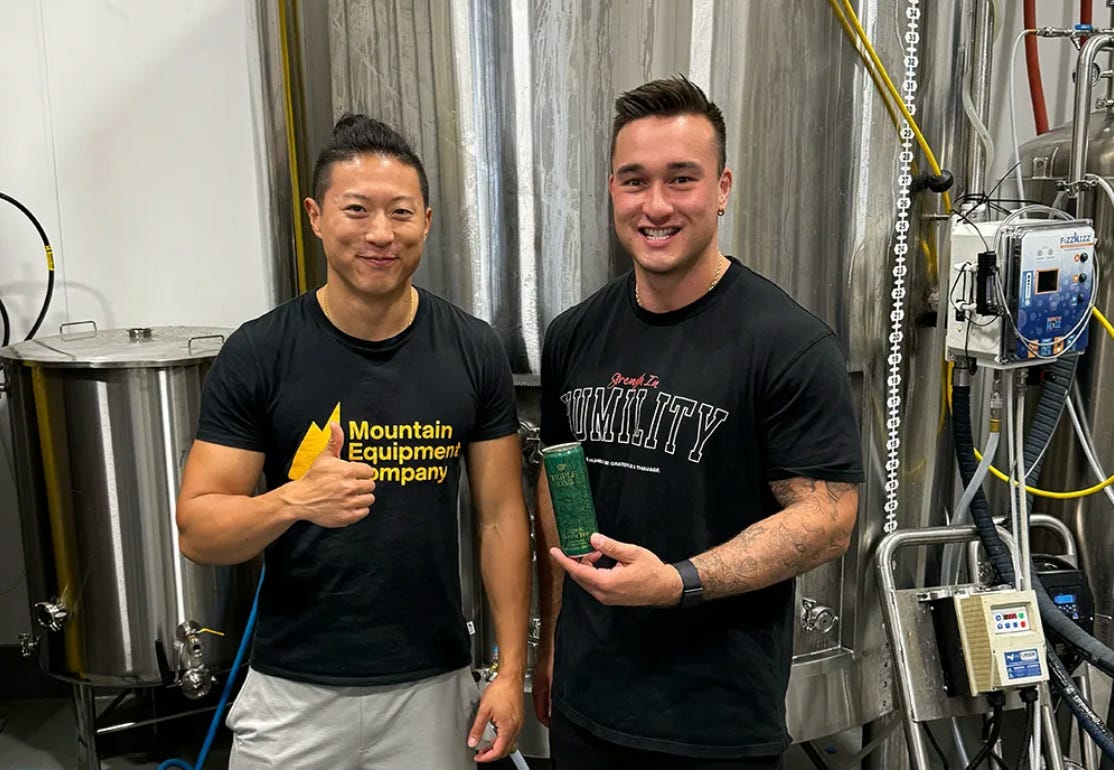
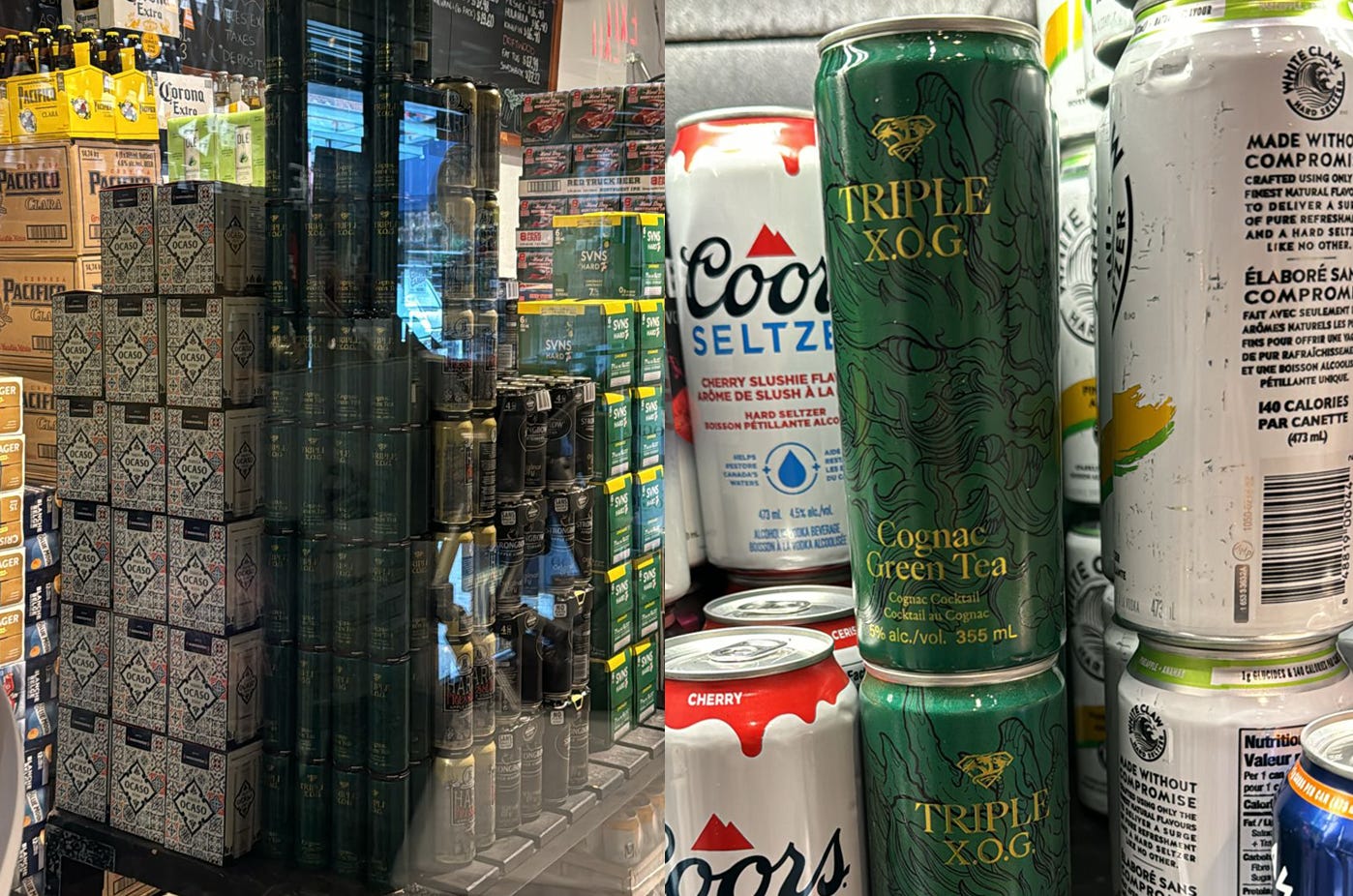
The entire journey of bringing the product to life came with a steep learning curve, but the duo’s perseverance started to pay off when their first production run was finally complete. On that same day, a friend who works at Yaletown Liquor Store suggested they drop off cans of Triple X.O.G. for his team to try. They got a text shortly after that the chain wanted to carry their products. Then, a couple of months later, they’d receive their next big and unexpected offer.
At the Hopscotch Festival, which showcases spirits, whisky, and beer, Triple X.O.G. ran a booth and were giving out samples. One of the event goers who they handed one to turned out to be James Franey, the director of procurement for JAK’S Beer Wine Spirits.
“We’re at the middle end of November, and from a lot of people I had spoken to, everyone closed for basically the rest of the year,” recalls Pham. “No one’s making decisions, right? But because he and his wife liked it so much, he’s like, ‘We’ll put it in all of our stores.’ Within a couple of weeks, they had all 11 stores place orders. And then we went from the one store that we were in to 12.”
More opportunities soon followed, though not by luck alone. Chen and Pham never hesitated to let people know what they were building or needed help with. And whether they were pouring samples at events or doing in-store tastings, they were persistent in getting people to try the product and understand the story behind it.
“You gotta be loud, you gotta be proud, you gotta be excited,” highlights Pham. “You almost have to be just overflowing with this infectious positive energy when you meet every single person. Especially if it’s something new. A lot of people are really scared to take that leap [...] You know, go from something that they love, right? To even have a chance to be open their mind to try something new, you have to bring that kind of energy.”
He adds: “We’ve had so many events where people just hang out with us for the last two to three hours, and it feels like they’re working with us. Just full-on ambassadors. They’re rallying everyone over towards us. It ends up feeling like we’re having a crew just hanging out [...] That’s just a really cool experience that we’ve gotten to have through this whole process.”
Local momentum turning into global demand
Beyond intuition, perseverance, and showing up, seizing opportunities—even when Chen and Pham felt unprepared—was pivotal to Triple X.O.G.’s momentum.
One weekend, they were working separate events. At both, different people told them the same thing: they should audition for Dragons’ Den. They hadn’t even considered it—they didn’t know the team was in Vancouver—but after enough encouragement, they decided to give it a try. The duo had only 10 minutes to prepare to make it in time. They practiced in the car and even had to buy their own product from a store before walking in.
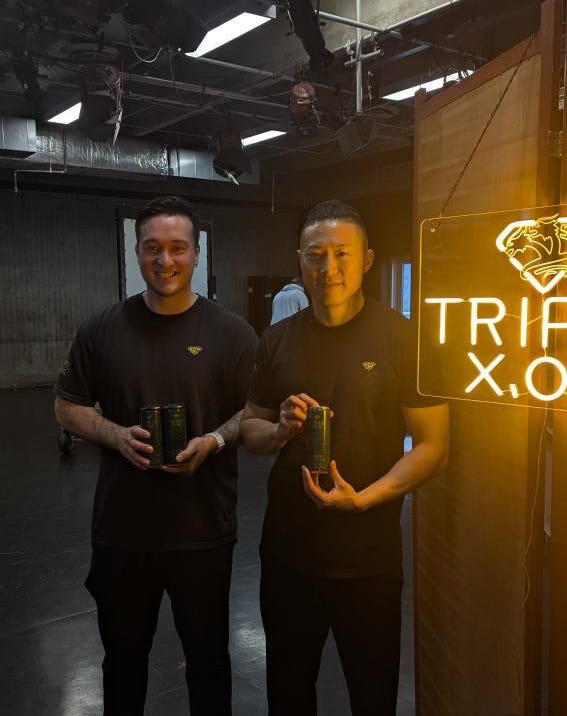
The last minute choice would open the door to a deal of a lifetime and reaching millions globally.
Triple X.O.G. would not only make the cut but fly to Toronto to pitch to the dragons. Chen and Pham opened their story by highlighting the culture before the market gap and stayed calm while being critiqued and questioned.
They would walk away with multiple investment offers: one from Wes Hall, widely known as the “King of Bay Street” and for supporting BIPOC entrepreneurs, and the other from Manjit Minhas, a beverage industry leader who co-founded one of the top 10 largest breweries in the world. The duo would partner with Minhas and are currently in the due diligence stage, as discussing the final deal terms can continue after the initial conversation shown on-air.

“No matter how likeable someone might be, the success of a product in my industry inevitably comes down to taste,” says Minhas. “Triple X.O.G. was love at first sip. I didn’t put my cup down. The more they shared about their story, success to date and plans for the future, I knew I wanted to work with them to help Triple X.O.G. grow.”
After the Dragons’ Den episode went live on TV and social media, Triple X.O.G. brought in around 20 percent of their overall online sales within four days. Their popularity also took off within Canada and beyond. Viewers reached out asking where they could buy the product or when it would be available in their area—including across B.C., Quebec, Ontario, the Netherlands, Australia, and Asia.
Now, Chen and Pham are focused on expanding the line. They’re developing new flavours, a non-alcoholic option, and a 7% version alongside the 5%. In addition, they’re working on distribution across Canada and preparing for their next funding raise.
The foundations that shaped them
Looking back on the journey, Chen and Pham reflect on the influences, experiences, and perspectives that kept them grounded as they spent two years to build the formula and business before launching.

Chen emphasizes his family’s different “superpowers.” His father, of Taiwanese descent, left a stable job at Coca-Cola to start a recycling business—which Chen helped with as early as five-years-old. Watching his father’s entrepreneurial pursuit pushed him to keep exploring what he’s capable of, going from working as an engineering consultant to working alongside his dad, and co-owning a restaurant with his brother, then a strength and conditioning gym with a friend.
“He can create opportunities out of anywhere,” says Chen of his father. “You drop him anywhere in the world and this guy can come up with 10 business opportunities and actually execute on them [...] Growing up, every time we would travel, he’d always turn it into a business trip, like literally drive through an industrial area, poke around, and then just be like, ‘Hey, let’s go talk to these guys.’ We’d be all embarrassed and shy. He’d be like, ‘No, no, no, come,’ and then next thing you know, we’re eating dinner at these people’s houses. It’s just really crazy what he’s been able to do [..] So I definitely really look up to him.”
Like Chen, Pham’s family, of Vietnamese and German descent, instilled in him the values of hard work, resilience, and ambition. That would lead to establishing a career in insurance sales. Pham worked his way up to being consistently ranked in the top 1% in North America, while mentoring new professionals in the space to meet their potential. Recognizing that adaptability matters just as much as persistence has been key to his personal, and later, Triple X.O.G.’s success.
“Being in that atmosphere, it forces you to become relentless in what you do,” Pham underscores. “No matter what obstacle you’re faced with, there’s always a moment where you can take a second to pause and be like [...] ‘How do we pivot from what’s going on?’ There’s always a way around it, but you gotta be able to take a step back and look at the different angles. Because sometimes it’s just about the approach. There’s a million ways to get to the same point, but you just have to be able to realize that there are different doors that you can go through.”
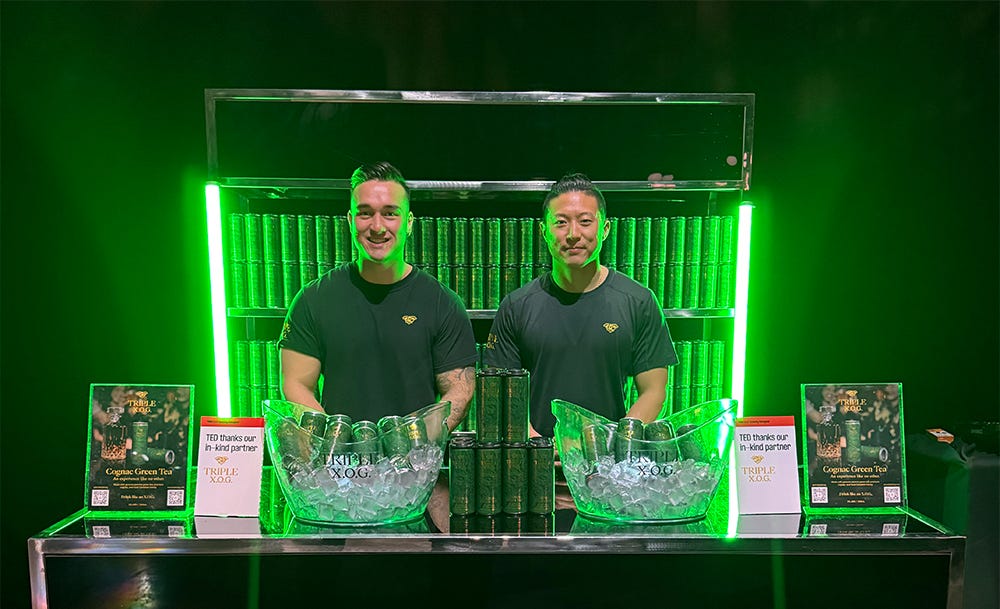
On advice for other early stage founders, Pham reminds to not hesitate to lean into the people supporting you or walk away from those who, say, write off your ideas as “crazy.”
“When you’re in the building stages and you still don’t know what you’re creating, you gotta make sure you have the right kind of network and circle around you,” he highlights. “We’ve been very fortunate that we’ve had really good friends and family support us all the way through this process.”
Chen encourages others to not be afraid to try—explore the ideas that interest you—even if past ones never took off. What didn’t move forward doesn’t shape the outcome of what’s ahead.
“If you were to see my computer, I have this folder of all these different ventures that I’ve tried to pursue,” he shares. “[They’ve] all failed at different stages—whether it’s just the initial point where I was just looking into it or actually got halfway down. There’s a lot of failed opportunities, but that’s just the name of the game.”