


Tune into the full interview for more behind-the-scenes above or on Spotify or Apple
Within six months of an exit, serial entrepreneur and investor Ian Crosby was already imagining what he could build next. The ideas, he says, kept swirling in the back of his mind that he started a spreadsheet.
It wasn’t until he found himself prototyping in his Airbnb instead of sightseeing while in Europe that he’d get closer to the answer. When a startup that he met with recommended that he try ElevenLabs—a platform that lets users build and launch AI agents that can talk, type, and take other actions across phone, web, and apps—he created his own with a British accent that started off as “hugely entertaining,” he says, until the idea hit him: an accounting system that’s fully autonomous.

An agent that does a software company’s bookkeeping from start to finish without any staff. It would connect to their bank accounts, payroll system, tools, and email so that it can gather context on their business and compare financial records across systems to verify the numbers match and flag anything that doesn’t. If it needs additional context or approval to complete a step, it’ll check in with the founder, who can respond through chat or accept or deny requests at the click of a button. At any time, the founder can access their financials and insights behind them and export records to hand off to their tax preparer for filing.
The platform would then evolve into becoming “the Shopify for software companies.” It would handle the website, incorporation, bank accounts, payments, accounting, and everything else in between. The reason: while AI now makes it faster than ever to build and ship products, there still isn’t a single place for software companies to build and run their entire business the way Shopify does for e-commerce companies.
That’s exactly what Crosby is building now with Synthetic, beginning with accounting where pricing will start at $49 per month. The company today announced it raised $10 million USD in seed funding led by Khosla Ventures. Participating investors include Basis Set Ventures, Shopify co-founder and CEO Tobi Lütke, Opendoor CEO and former Shopify COO Kaz Nejatian, Bridge co-founder Zach Abrams, whose company was acquired by Stripe for $1.1 billion, Accrual CEO and former Brex CTO Cosmin Nicolaescu, and Figure CEO and former Brex COO Michael Tannenbaum.
This is the story of a founder who created the largest company of its kind in the world, took what he learned from running Shopify’s banking division to start his next company that was acquired in less than a year and a half, and why he’s dedicating however many years it takes to build Synthetic, along with the moments in between that pushed him to dream bigger, from being repeatedly told his idea was doomed by a tech legend to having to step away from his first venture.
Focusing on quality control
Synthetic’s current priority is expanding its engineering team, finding the calibre who can undertake one of AI’s most pressing challenges: reliability.
“Every single person on the team is exceptionally good at their job, highly paid and rewarded, and we all work very intensely,” Crosby highlights. “We’re a 60-hour week culture. So it’s hard finding people who are smart, committed, and up to our talent bar, and also not already doing something crazy.”
For any company, recruiting the best in the industry is only getting tougher as skepticism shifts toward more optimism. Earlier this month, the Atlantic’s Rogé Karma reported that six months ago, the industry was looking “pretty bubbly.” Experts and journalists were comparing it to the dot-com bubble of the ’90s, as companies invested hundreds of “billions of dollars, much of it borrowed, into building new data centers with no clear path to profitability.”
But today, Karma wrote, we’re in a very different world because of Claude Code and other AI agents. Mass adoption has helped make Anthropic possibly the fastest-growing business in history, growing faster than Zoom during the pandemic and Google during its search advertising boom. The rest of the sector is growing too. OpenAI’s annualized revenue increased 17% from December to February. Google, Microsoft, and Amazon reported cloud growth of 48%, 39%, and 24% for the quarter ending December compared to the year before. On earnings calls, their CEOs pointed to AI as a major driver of that demand.
The conversation around the industry has now changed from “Can agents do the task?” to “Are they reliable?” Last week, Scale AI’s interim CEO Jason Droege published a memo highlighting that “winning in AI now means winning the reliability race” and that many companies are “capability cosplaying” as “their promises will not hold up under the weight of the world’s most important decisions.” Experts have long been raising concerns. In February, researchers at Princeton University pointed out that while AI agents are getting better at completing tasks, reliability is still lagging behind. That includes behaving consistently, withstanding changes, recognizing when they may fail, and limiting the severity of mistakes.
Synthetic isn’t taking any shortcuts to deliver on reliability. The company won’t be releasing the product until it’s confident the system is more reliable than a bookkeeper. Crosby isn’t sidestepping the reality of that timeline either, which, he admits, he’s not sure if that could take six months or six years. On his approach to quality control, Crosby shared that one of the “most important things” he did at the start was put together a memo called “Trust Is What We Sell.” It defines the mindset and lays out when the system can proceed independently and when it needs to touch base with users. That involves a review mechanism with “very conservative thresholds.”
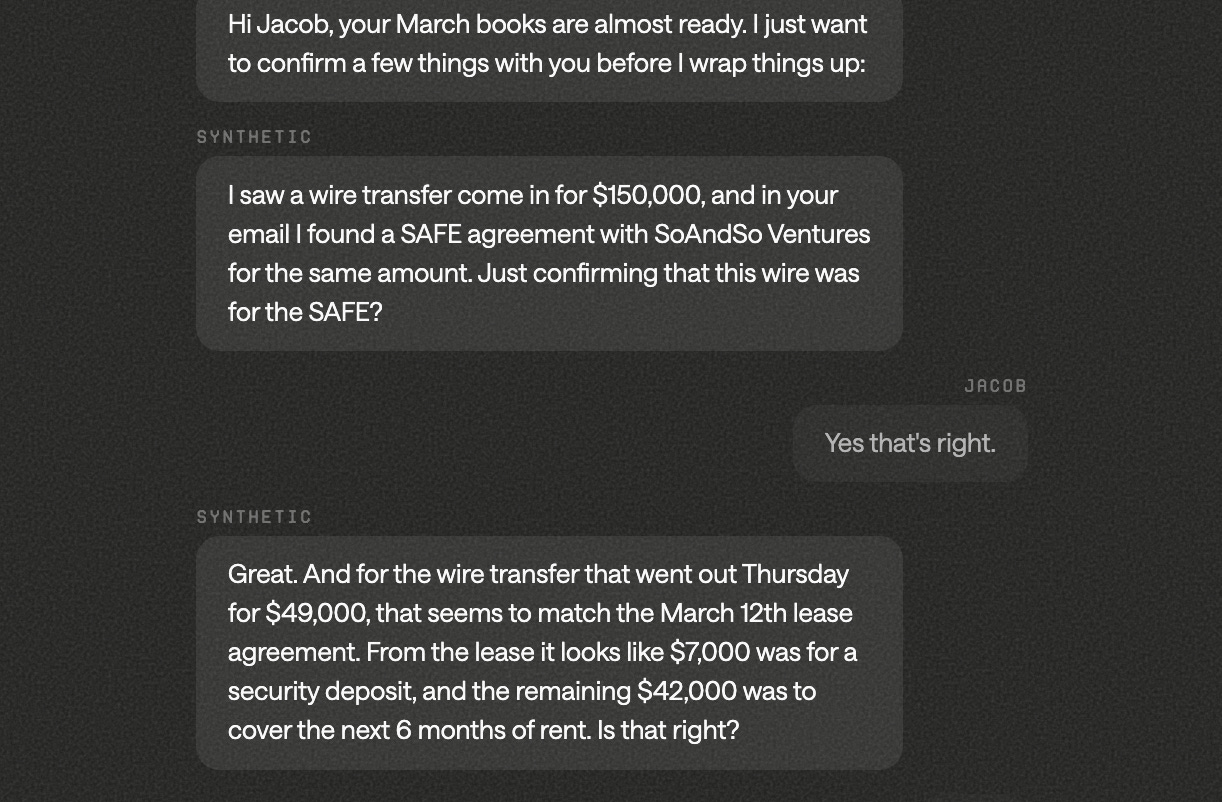
“We want to start from it asks about 100% of the things that could be wrong,” Crosby explains. “But over time, it’s going to ask about fewer and fewer things because it has more ways to figure these things out on its own. It doesn’t have to check with you.
Maybe the equation of work to usefulness is not this autonomous future that we envision but the technology’s going to get there [...] Now it’s only 10% as much work. That is an equation that you just make better every year and the product is just naturally getting better.”
Two decades in accounting
Why Crosby is undeterred by the work ahead is his conviction to build “something novel and useful” rather than “something easy.”
That comes from already spending two decades reinventing accounting. Crosby was 19 and studying finance and economics at UBC when he got his first job as a bookkeeper. It wasn’t a position he had applied for. It was the only shot he got at joining a video game company after pitching every one in Vancouver to hire him. It was there that he not only honed his accounting skills, but also learned programming when he created custom tools to spend more time testing games than bookkeeping.


After graduating from UBC, Crosby worked as a consultant for Bain & Company. Because he was the youngest member of his team, he was often tasked with pulling together masses of data and uncovering what could make the business more successful from what it revealed. Working alongside him were people who set a high bar of competence and went on to become founders or executives at companies valued in the hundreds of millions, some of which invested in Synthetic.
As much as Crosby was learning at Bain, he found himself wanting to operate much faster than the pace set. So, he left after two years, as he realized entrepreneurship might be the only path that matched his speed.
For his first venture, he thought about ideas where he could lean into solving a problem he already knew well and leverage his programming skills. That’s when he convinced his childhood friends, Adam Saint and Jordan Menashy, to join him in figuring out how to automate bookkeeping for small businesses.
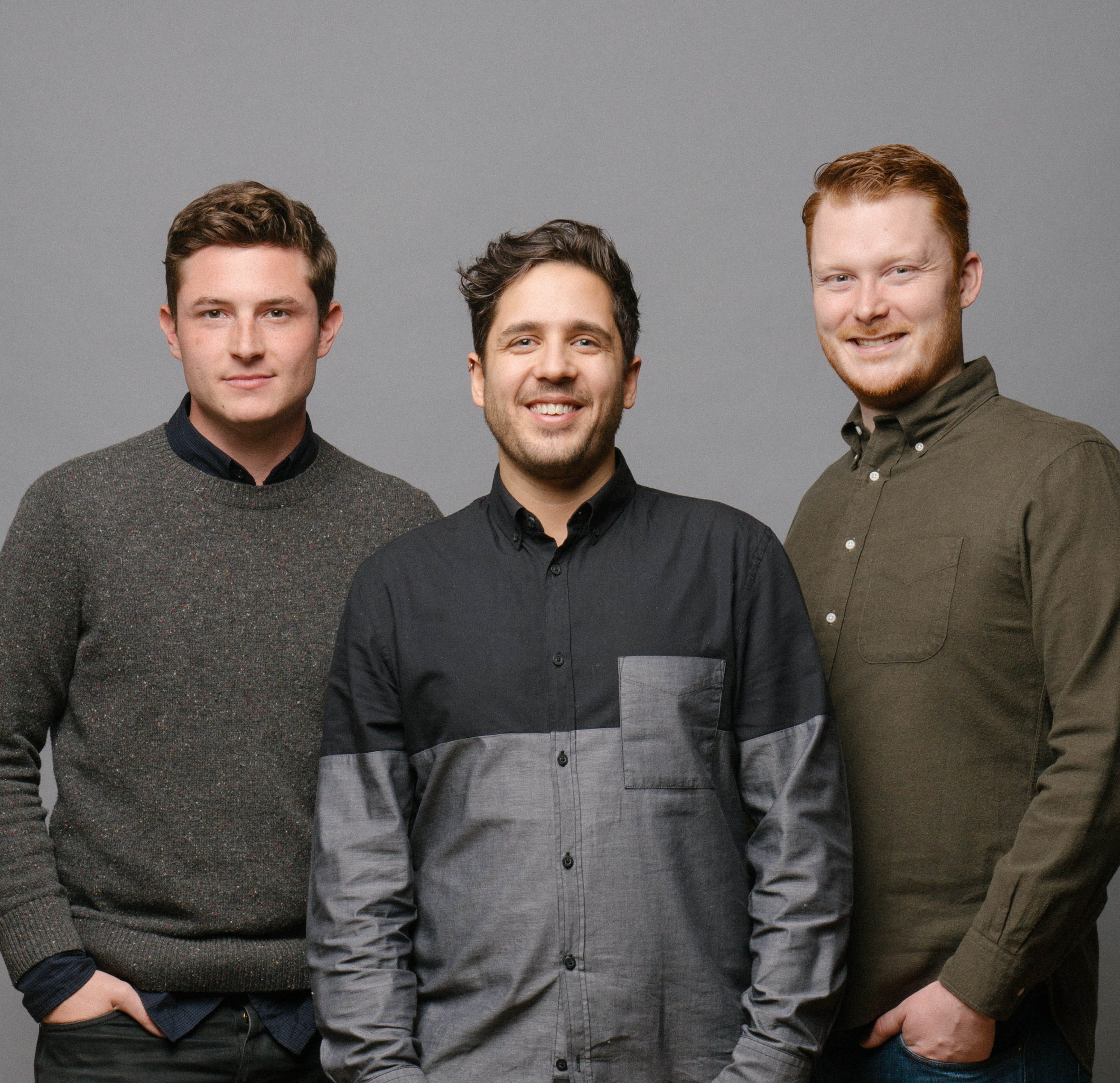
The startup, named 10 Sheet, got into the Techstars accelerator and was repeatedly told the idea was “doomed” by tech legend Joel Spolsky, who co-founded Stack Overflow and Trello. But the company, renamed Bench, would become the largest bookkeeping service in the world for small businesses. It evolved into banking, cards, payroll, and taxes, raised over $100 million, and remains profitable today.


Around 11 years into Bench, Crosby accepted Shopify’s offer to run its banking division after stepping down from the board. At the time, Bench had just raised a Series C, turned down a “highly lucrative” acquisition offer, and had “budding partnerships” with Shopify and other major companies. Yet some board members wanted to take the company in a different direction with a new CEO, which, as Crosby anticipated, would prove to be the wrong call. The company would later shut down without notice and only resumed operations after an acquisition saved it.
By then, Crosby had left Shopify to team up with Saint again and build Teal: APIs and tools that let companies build accounting offerings. He didn’t plan to, or even think, his next company would be in accounting. Working at Shopify gave him more exposure to a problem no one had solved yet: how companies could integrate accounting into their products—like banking and lending—and draw insights from them. Less than a year and a half after launching, Teal was acquired by startup banking platform Mercury for an undisclosed amount.
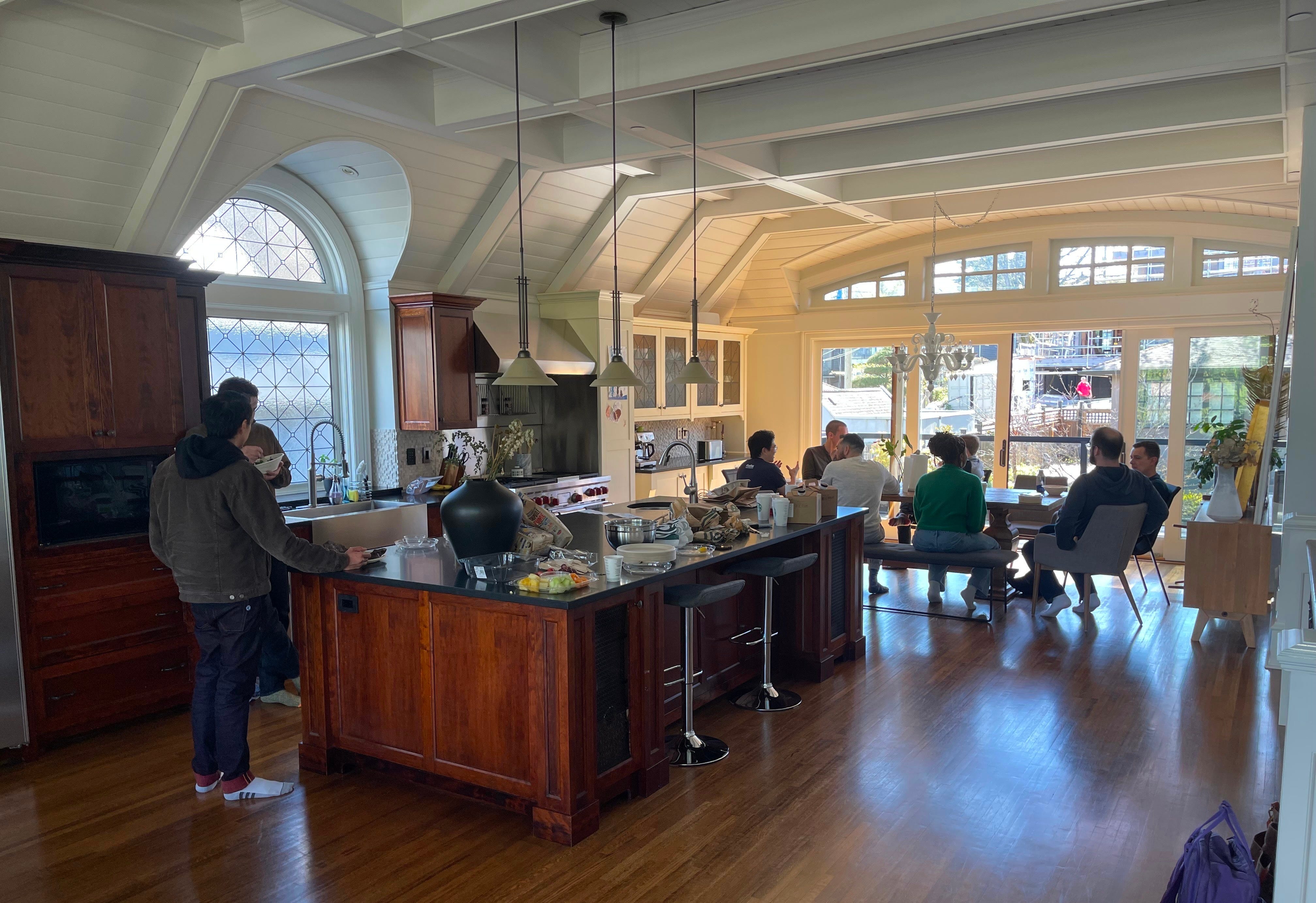
“One of the most single, valuable experiences I’ve had in my career in terms of making me a better entrepreneur—even though I wasn’t entrepreneuring at the time—was I got access to Tobi’s brain and Kaz’s brains,” Crosby reflects. “Tobi had given me some mentorship before, but being inside that incredible machine, I downloaded so much so fast and then immediately had this idea of, ‘What are the kind of things that Shopify needs to buy?’”
Teal seemed like a very natural thing, like, ‘Oh, if I could create this thing, then these big companies could solve this new kind of problem,’ and then downstream, these small businesses would get the benefit and access to better software [...] It was exciting to try out a different perspective because I’d always had the small business perspective. I’d never done enterprise sales before. I was like, ‘Let’s go. Something new to learn.’”
Reflections on building
Following Teal’s acquisition, Crosby joined Mercury as their head of accounting products. It was after that position wrapped up that he ended up in Europe, where he thought of the idea for and began working on Synthetic. Asked where the resilience that fuels his ambitions to keep building come from, Crosby says joining the Army at 17 taught him to “have a different relationship to pain than most people.”

“My perspective is that I need to reconcile myself to reality,” he explains. “There’s something to learn. If there’s a challenge, it’s because I’m somewhat misaligned and it’s on me to discover where that misalignment is coming from. Like, clearly I should’ve done something different.
And then I can ask myself, ‘Okay, what was that thing?’ [...] ‘Why did I not already figure out that thing?’ ‘What is it about my thinking that I’m not getting ahead of these things? I just keep on working backwards [...] I just really wanna be better, you know? I really want to have massive success in the things that I do.”
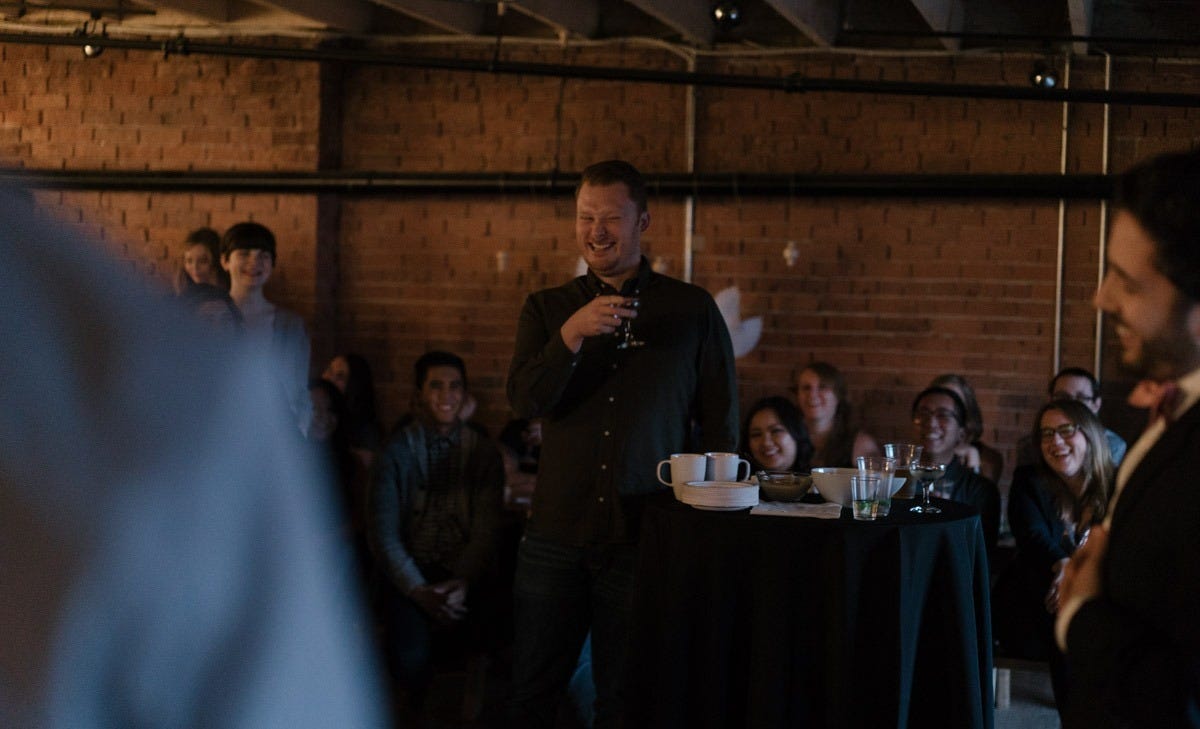
That mindset also shapes how Crosby thinks about other founders. In between building his own ventures, he has long been angel investing in vertical SaaS startups. He also became a venture partner at Basis Set Ventures, which has been investing in AI companies for nearly a decade and was an early investor in Scale AI.
On what advice he’d give to early stage companies, Crosby says: “Being an entrepreneur is a craft in itself. It’s a skill set that you accumulate over time. There’s many different aspects to it, and it’s not a matter of just being good at entrepreneurship or bad at entrepreneurship.
So many people start their first business and get very wrapped up in what it means and being afraid of failure and what everyone’s going to think if it doesn’t work out versus going, ‘I’m here to learn.’ ‘This is an experiment.’ ‘I’m going to improve my game here.’”


